

For tech founders and Chief Technology Officers (CTOs) leading startups in North America, the race to integrate Artificial Intelligence is fierce. Securing venture capital funding and acquiring users now demands sophisticated machine learning capabilities, predictive analytics, and seamless generative AI interfaces.
However, translating an investor pitch deck into a fully functioning AI product presents a massive hurdle: The global talent shortage. Hiring a full in-house team of Data Scientists, MLOps engineers, and specialized mobile developers takes months of recruitment and requires a payroll that most startups simply cannot afford.
Outsourcing is the logical solution, but it introduces a critical dilemma. Should a startup hire a cheap offshore development shop across the globe, or should they partner with a premium ai app development company in usa?
When building standard CRUD (Create, Read, Update, Delete) applications, offshore development is a viable cost-saving strategy. However, building AI is fundamentally different. It involves handling highly sensitive proprietary data, navigating complex vector mathematics, and executing rapid architectural pivots.
In this comprehensive guide, we will break down why elite tech founders consistently choose US-based tech partners to navigate the complex AI application development lifecycle. If you are ready to build a secure, scalable product, partnering with a premier ai app development company like MindRind ensures your startup operates at Silicon Valley standards from day one.
Chapter 1: The Intellectual Property (IP) and Security Risk
The most valuable asset a tech startup possesses is not its marketing strategy; it is its Intellectual Property (IP) and its proprietary data.
When you outsource an AI application offshore, you are handing over the keys to your kingdom. You are sharing your core algorithms, your vector database architectures, and potentially your users’ sensitive data with an entity that operates outside of United States legal jurisdiction.
The NDA Enforcement Problem
Non-Disclosure Agreements (NDAs) and Non-Compete clauses are only as strong as the legal system that enforces them. If an offshore agency decides to reuse your custom machine learning models or leaks your proprietary backend architecture to a competitor, enforcing an NDA across international borders is a legal nightmare. It costs millions of dollars in international arbitration money that a startup does not have.
The US Standard of Data Sovereignty
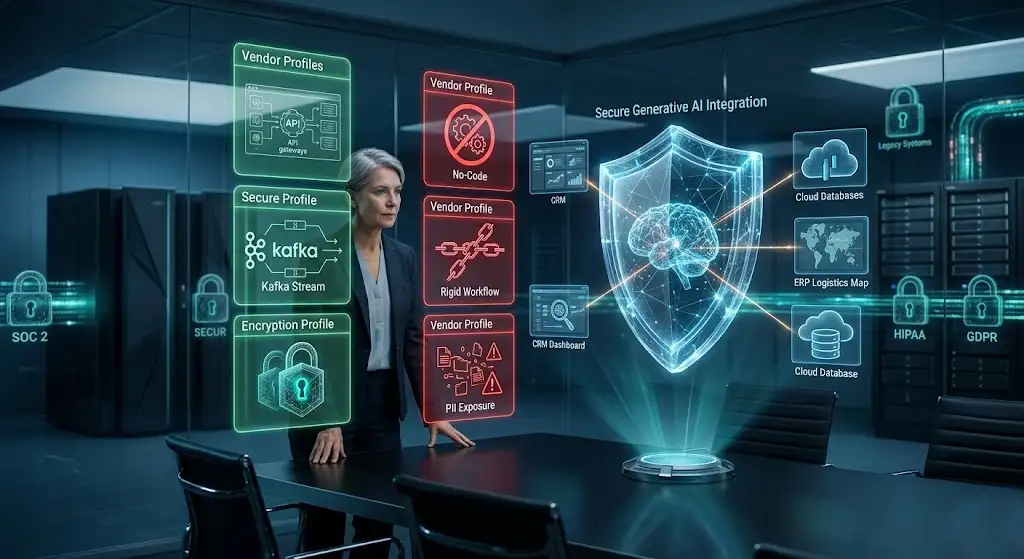
Partnering with a US-based AI agency mitigates this existential threat. US agencies operate under strict federal and state intellectual property laws. Legal contracts, IP assignments, and confidentiality agreements are ironclad and immediately enforceable. Furthermore, US agencies understand strict domestic compliance frameworks (like HIPAA for healthcare or SOC 2 for B2B SaaS). They know how to build Zero-Trust architectures and deploy AI models within secure Virtual Private Clouds (VPCs) to ensure your data never leaves your control.
Chapter 2: The Agile Syncing and Communication Factor
Building a machine learning application is not a linear process. You cannot simply hand a 100-page requirement document to a development team and expect a perfect app three months later.
AI development is highly iterative. A data scientist might test three different Large Language Models (LLMs) on a Tuesday, realize the latency is too high, and need to pivot to an Edge AI (CoreML) solution by Wednesday.
The Timezone Death Spiral
If your development team is located 12 hours ahead of your startup, this iterative process collapses.
- Your CTO finds a bug or requests an architectural pivot at 2:00 PM EST.
- The offshore team is asleep. They see the message the next day.
- They ask a clarifying question while your CTO is asleep.
- A simple 5-minute technical conversation takes 48 hours to resolve.
Synchronous Agile Sprints
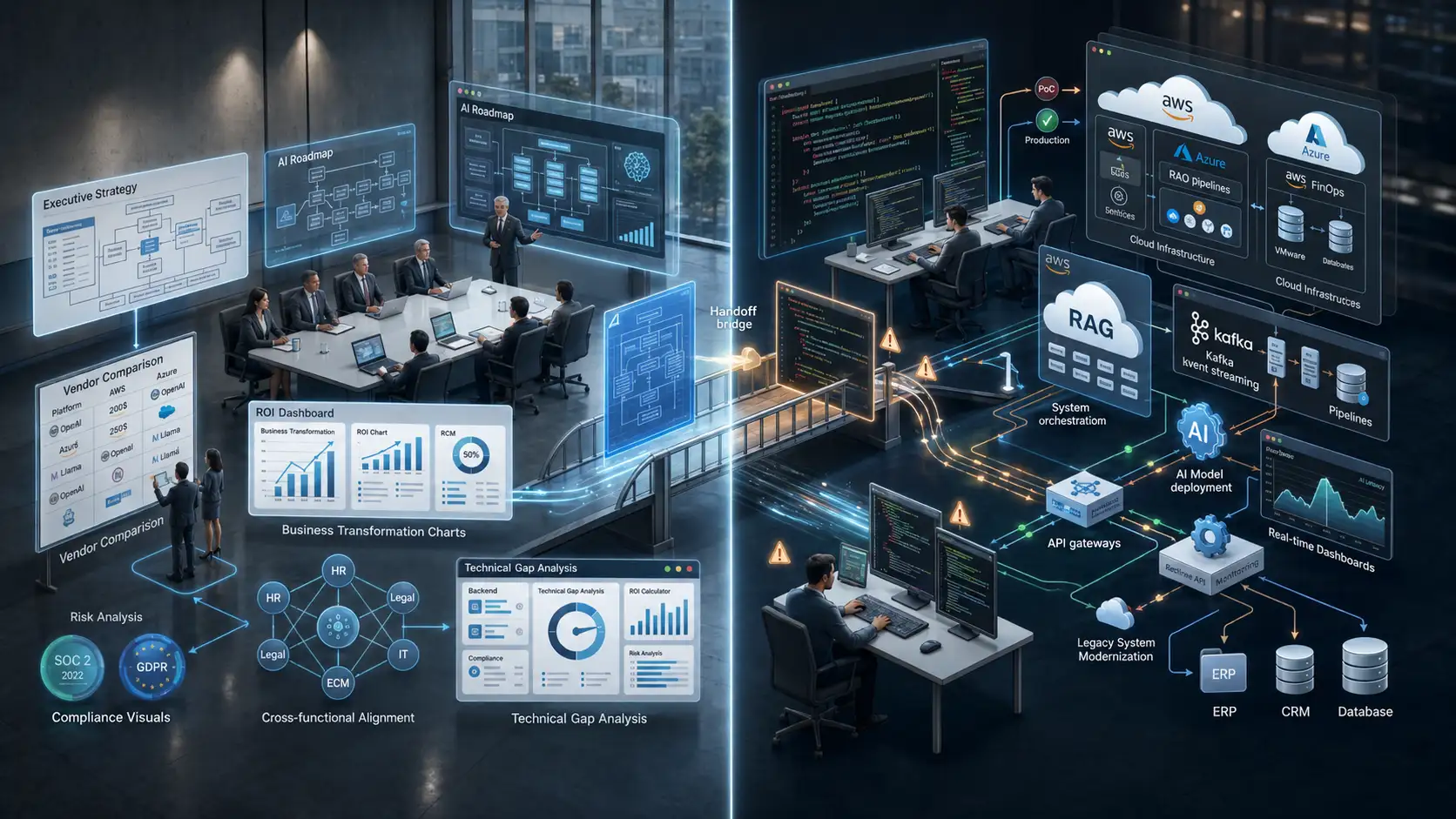
US-based AI agencies eliminate this latency. By sharing overlapping timezones, your startup’s founders can hold synchronous daily stand-ups, rapid sprint planning meetings, and live code reviews with the engineering team. This real-time collaboration is the backbone of the Agile Methodology. It ensures that the product team and the machine learning engineers are in total lockstep, drastically accelerating the time-to-market.
If you want to understand the exact workflow and daily cadences of these partnerships, it is critical to learn what an artificial intelligence app development agency actually does during these collaborative sprints.
Chapter 3: Custom Engineering vs. Generic API Wrappers
The generative AI boom has created thousands of “AI Agencies” overnight. Unfortunately, many offshore shops are simply traditional web developers who have learned how to make basic REST API calls to OpenAI. They build generic “wrappers.”
If your startup’s only competitive advantage is a basic prompt sent to ChatGPT, you have no defensible moat. Larger competitors will clone your app in a weekend.
Deep Machine Learning Expertise
US-based agencies are embedded in the epicenter of the global tech industry. They attract top-tier talent from major tech hubs who understand deep software engineering, not just API integration. Instead of building generic wrappers, US agencies specialize in custom enterprise AI mobile apps. They build proprietary Retrieval-Augmented Generation (RAG) pipelines, implement complex vector databases, and fine-tune open-source models (like Llama 3) to run locally on your infrastructure. This deep custom engineering creates a strong technological moat that competitors cannot easily copy.
Chapter 4: The True Cost of “Cheap” Development
When a startup founder looks at an hourly rate sheet, the math seems obvious: an offshore developer charging $30/hour looks significantly better for the runway than a US-based AI engineer charging $150+/hour.
However, evaluating software development strictly by the hourly rate is a massive financial trap, especially in Artificial Intelligence. You are not paying for hours; you are paying for architecture, scalability, and execution.
The “Technical Debt” Trap
When inexperienced developers attempt to build an AI application, they often take shortcuts. They might ignore edge-case hallucinations, fail to implement semantic caching at the API gateway, or hardcode massive context payloads that cause token costs to spiral out of control.
This creates massive Technical Debt. While the initial build might have been “cheap,” the ongoing server and API costs will destroy the startup’s unit economics. Eventually, the startup will have to hire an elite US agency to completely tear down and rebuild the flawed backend. The “cheap” offshore app ends up costing three times as much as doing it right the first time.
Architecting for ROI and Scale
A premium US-based AI agency understands that the goal is not just to write code; the goal is to build a profitable business. They engineer the backend to optimize token usage, compress models to save on GPU cloud hosting, and architect the app to scale effortlessly from 1,000 users to 1 Million users.
Furthermore, they understand how software architecture directly impacts business strategy. A US agency will help technical founders map out exactly how to monetize AI application development solutions, ensuring the app’s Freemium limits and subscription tiers are mathematically aligned with the underlying cloud compute costs.
Chapter 5: Overcoming the Tech Talent Shortage
Even if a well-funded US startup decides they want to build their AI app entirely in-house, they will immediately crash into the 2026 global talent shortage.
The engineers who possess deep knowledge of PyTorch, Vector Calculus, Neural Network deployment, and native mobile ML integration (CoreML/TFLite) are incredibly rare. These “unicorn” developers are being aggressively recruited by Silicon Valley giants offering $300,000+ base salaries and massive equity packages.
The Agency Retainer Advantage
For a startup trying to conserve its Series A funding, building an internal AI squad (an Architect, a Data Engineer, an MLOps specialist, and a Mobile Dev) is financially impossible.
Partnering with a US-based AI development company provides a massive strategic workaround. Instead of spending 6 months fighting Silicon Valley giants for talent, the startup signs a contract and instantly gains access to a fully formed, elite squad of machine learning engineers on day one. This converts a massive, unpredictable payroll liability (CapEx) into a predictable, fixed project cost (OpEx).
Build Your Startup’s Future with MindRind
Deciding who will build your core product is the most consequential decision a founder will make. You cannot afford to risk your intellectual property, suffer through 48-hour communication delays, or launch a buggy product built on a fragile, generic API wrapper.
At MindRind, we are the premier ai app development company in usa. We operate at the highest standards of Silicon Valley engineering. Our elite squads of machine learning architects, data scientists, and mobile developers partner with tech startups to build custom, highly defensible AI applications.
We protect your IP, sync with your timezones for rapid agile sprints, and build architectures designed to scale globally and dominate the App Store.
Stop risking your runway on unproven development. Contact MindRind today to partner with a world-class US AI engineering team.
Frequently Asked Questions
Hiring a US-based company ensures strict adherence to US Intellectual Property (IP) laws, preventing your proprietary algorithms and user data from being stolen. It also eliminates timezone barriers, allowing for real-time agile communication, which is critical for complex, iterative AI development.
The upfront hourly rate is higher, but the Total Cost of Ownership (TCO) is often lower. US agencies build highly optimized architectures (like semantic caching) that drastically reduce ongoing cloud and API costs. Offshore shops often build flawed architectures (Technical Debt) that must be completely rebuilt later, costing the startup more in the long run.
US agencies operate under strict federal contracts. When you hire a US agency, you sign ironclad Non-Disclosure Agreements (NDAs) and IP Assignment contracts, ensuring that your startup legally owns 100% of the custom machine learning models and source code generated during the project.
An API wrapper is a basic app that simply forwards a user’s text to a public AI (like ChatGPT) and shows the response. It has no competitive advantage. Custom AI development involves building proprietary data pipelines (RAG), fine-tuning open-source models, and deploying Edge AI (on-device processing) to create a unique, highly defensible software product.
While simple prototypes can be built in a few weeks, a secure, scalable AI mobile app utilizing custom machine learning models, vector databases, and native mobile UI/UX typically requires a 4 to 6-month agile development lifecycle.
Yes. Elite US agencies specialize in staff augmentation. They handle the complex, mathematically heavy AI backend (vector databases, MLOps, inference servers) and provide your internal frontend developers with clean, well-documented APIs to easily integrate the AI features into your existing app.
There is a severe global shortage of specialized AI engineers who understand deep learning and MLOps. Startups must compete against massive tech giants offering exorbitant salaries to hire this talent. Partnering with an agency allows startups to bypass this 6-month recruitment cycle and start building on day one.
AI models require continuous maintenance (MLOps) because they suffer from “Data Drift” (losing accuracy as real-world data changes over time). Top-tier US agencies provide ongoing post-launch retainers to monitor model performance, update vector databases, and ensure the cloud infrastructure scales seamlessly as your user base grows.