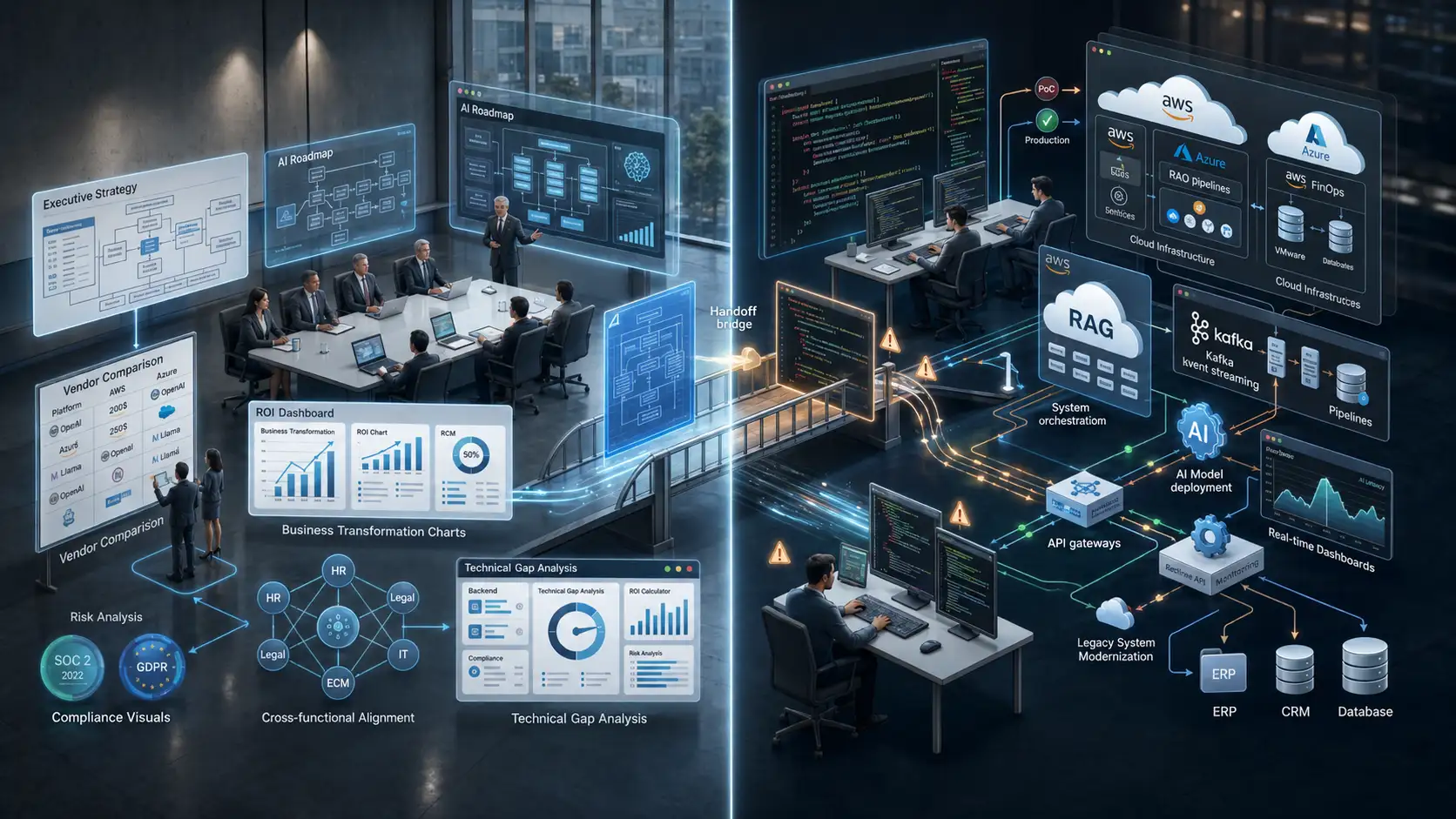


In modern corporate boardrooms, the mandate to integrate Artificial Intelligence is unanimous. Chief Information Officers (CIOs) and enterprise tech leaders are under immense pressure to deploy AI-driven tools that streamline operations, automate customer support, and unlock predictive analytics.
However, translating that mandate into deployed software introduces a massive strategic crossroad: Should your enterprise purchase an off-the-shelf “White-Label” AI solution, or should you invest in custom engineering from the ground up?
At first glance, white-label solutions appear incredibly attractive. They promise immediate deployment and lower upfront costs. But in the realm of generative AI and machine learning, taking the fast and cheap route often leads to catastrophic vendor lock-in, generic performance, and severe data privacy vulnerabilities.
To build a true technological moat, market leaders are increasingly turning to ai custom application development .
In this comprehensive enterprise strategy guide, we will dissect the architectural, financial, and legal differences between renting an AI platform and owning one. Understanding this dichotomy is a crucial phase in the overall AI application development lifecycle.
If your organization is ready to build proprietary, infinitely scalable software, MindRind operates as an elite ai application development company, engineering bespoke AI ecosystems that protect your data and multiply your enterprise valuation.
Chapter 1: The Allure and Trap of White-Label AI Solutions
A “White-Label” AI application is a pre-built Software as a Service (SaaS) product. A third-party vendor develops the core machine learning infrastructure, the UI/UX, and the backend databases. They then allow your enterprise to slap your brand’s logo and color scheme on the interface and present it to your customers or employees as your own.
The Immediate Appeal
- Speed to Market: Because the codebase is already written, deployment takes weeks rather than months.
- Low CapEx: There is virtually no Capital Expenditure (CapEx) required for software development. You simply pay a recurring monthly or annual licensing fee.
The Hidden Trap: Vendor Lock-in and Generic Logic
The fundamental flaw with white-label AI is that it is built for the masses. To be profitable, the vendor must sell the exact same underlying architecture to hundreds of different companies.
- Rigid Architecture: You cannot change how the AI “thinks.” If your business requires a highly specific Retrieval-Augmented Generation (RAG) pipeline to parse complex, proprietary financial formats, the white-label vendor cannot rewrite their core platform just for you.
- Vendor Lock-In: You do not own the source code, the vector databases, or the neural weights. If the vendor raises their prices by 300% next year, or if they suffer a massive server outage, your business is trapped. You are essentially building your enterprise’s future on rented land.
Furthermore, as your usage scales, the subscription tiers of these white-label platforms often become astronomically expensive. Tech leaders must carefully evaluate how to monetize AI application development solutions to understand why owning the backend APIs is much more profitable at scale than renting them.
Chapter 2: The Power of Custom AI Engineering
Custom AI development is the exact opposite of the white-label approach. It involves hiring a dedicated team of machine learning engineers, backend architects, and native mobile developers to build an AI ecosystem exclusively for your business.
100% Intellectual Property (IP) Ownership
In the tech industry, your company’s valuation is directly tied to the Intellectual Property you own. A white-label app adds zero value to your balance sheet. When you invest in custom development, you own the proprietary codebase, the custom-trained machine learning models, and the data pipelines. This becomes a highly defensible technological moat that your competitors cannot simply purchase from a vendor. To secure this IP flawlessly, US-based enterprises heavily prioritize partnering with a top-tier AI app development company in the USA to ensure all legal and copyright assignments are ironclad under American law.
Bespoke Machine Learning Models
Every enterprise has unique data silos. A generic LLM (like public GPT-4) cannot effectively analyze a hospital’s legacy electronic health records or a logistics firm’s proprietary supply chain database. Custom development allows data scientists to build bespoke AI agents. They can fine-tune open-source models (like Meta Llama 3) to speak in your brand’s exact tone of voice, or implement complex vector databases that connect directly to your internal ERP systems. The AI is molded to your business, rather than forcing your business to adapt to a rigid white-label app.
Chapter 3: Enterprise Data Security and Sovereignty
The most critical differentiator between custom and white-label AI applications is data security. For enterprises operating in regulated industries (Healthcare, Finance, Defense), data sovereignty is non-negotiable.
The Multi-Tenant Risk of White-Label Apps
By definition, a white-label SaaS operates on a “Multi-Tenant” architecture. Your highly sensitive corporate data is sitting in the same cloud database as the data of hundreds of other companies. While vendors use logical separation (software rules) to keep the data apart, a single security vulnerability in their code could result in your data leaking into a competitor’s AI interface. Additionally, you have no control over where the vendor sends that data. They may be routing your prompts through public AI APIs that use your data for future model training.
Zero-Trust Custom Architectures
Custom AI development allows you to dictate the security infrastructure.
- Virtual Private Clouds (VPC): Your engineers can deploy the entire AI application—including the Large Language Models and vector databases—directly onto your own AWS or Azure VPC. The data never leaves your corporate firewall.
- Dynamic Data Masking: Custom pipelines can be built to instantly strip Personally Identifiable Information (PII) from user inputs before they are processed by the AI, ensuring strict adherence to SOC 2, HIPAA, and GDPR regulations.
Chapter 4: Integrating with Legacy Enterprise Systems
Large enterprises do not operate on a single, modern tech stack. They have accumulated years of technical debt, utilizing massive, outdated legacy systems (like on-premise SAP, Oracle databases, or AS/400 mainframes).
The Integration Bottleneck of White-Label Apps
White-label SaaS solutions are built to connect with modern, standard APIs (like Stripe, Salesforce, or Shopify). If your enterprise relies on a 15-year-old proprietary database, the white-label AI app simply will not be able to read or write data to it. The vendor will not rewrite their core platform to accommodate your outdated tech stack, leaving your AI application completely siloed from your main business operations.
Custom Middleware and API Gateways
Custom development solves this bottleneck. When you hire an elite engineering team, they do not just build the AI; they build custom middleware. They construct bespoke API Gateways that act as translators between your legacy on-premise databases and the modern neural networks. This ensures that the AI can seamlessly ingest decades of historical company data, allowing for incredibly accurate predictive analytics and automated workflows without disrupting your core business operations.
Chapter 5: The Total Cost of Ownership (CapEx vs. OpEx)
When debating white-label versus custom AI, the financial analysis must look beyond the first 6 months and focus on the 5-year Total Cost of Ownership (TCO).
- The White-Label Cost Curve (OpEx Heavy): White-label solutions have a low initial cost but operate on strict recurring licenses. As your company grows and you add thousands of users (or process millions of AI API tokens), the vendor will aggressively upgrade your pricing tier. Over 3 to 5 years, the operational expenditure (OpEx) of a white-label platform often vastly exceeds the cost of building it yourself, and at the end of those 5 years, you still own zero intellectual property.
- The Custom Build Cost Curve (CapEx Heavy): Custom development requires a significant upfront Capital Expenditure (CapEx) to pay for machine learning engineers, data scientists, and UI/UX designers. However, the ongoing maintenance costs drop significantly. You only pay for the raw cloud compute you use, and you have complete control to optimize the architecture to save money.
Furthermore, custom development allows your team to completely control the brand experience. You are not forced to use generic templates. To understand how critical bespoke design is for user retention in AI products, review our guide on UX/UI design for generative AI apps.
Chapter 6: The Execution: Partnering with an Elite Agency
If an enterprise decides to pursue custom AI application development, they must overcome the global talent shortage. Building a specialized internal AI engineering division from scratch is slow and extremely expensive.
To achieve speed-to-market while retaining 100% IP ownership, enterprises partner with elite AI development agencies. This model provides the enterprise with a dedicated, fully-formed squad of ML architects and mobile developers on day one. To ensure a successful partnership, CTOs must understand the exact agile methodologies and what to expect when hiring an artificial intelligence app development agency.
Future-Proof Your Enterprise with MindRind
In the era of Artificial Intelligence, your software architecture is your ultimate competitive advantage. Renting a generic white-label app means adopting the exact same capabilities as your competitors.
At MindRind, we build technological moats. We are a premier ai application development company specializing in bespoke enterprise ecosystems. We do not sell white-label templates. We architect, train, and deploy custom machine learning models, secure data pipelines, and highly scalable mobile/web applications that you own 100%.
Whether you need to integrate a massive open-source LLM into your legacy ERP system or build a hallucination-free mobile application from scratch, we have the elite engineering talent to execute your vision.
Don’t rent your enterprise’s future. Contact MindRind today to invest in custom AI application development.
Frequently Asked Questions
A white-label AI application is a pre-built software product created by a third-party vendor. The vendor allows your company to rebrand the application with your own logo and colors, but the vendor retains 100% ownership of the underlying source code, algorithms, and databases.
Enterprises choose custom development to secure 100% Intellectual Property (IP) ownership, eliminate vendor lock-in, ensure strict data privacy (by hosting models on their own Virtual Private Clouds), and build bespoke machine learning models that integrate flawlessly with their proprietary legacy systems.
It poses significant risks. White-label apps operate on multi-tenant architectures, meaning your highly sensitive corporate data is stored on the same cloud servers as hundreds of other companies. A single vulnerability in the vendor’s system could expose your proprietary data.
Vendor lock-in occurs when a company builds its business processes around a white-label or proprietary SaaS platform. Because the company does not own the source code or the database structure, they cannot easily switch providers. If the vendor raises prices aggressively or goes out of business, the enterprise is trapped.
White-label apps rely on modern, standardized APIs and often cannot communicate with outdated enterprise systems (like AS/400 mainframes). Custom AI development includes building bespoke middleware and API Gateways that act as translators, allowing modern neural networks to seamlessly read and write data to legacy on-premise databases.
In the short term (first 6 months), white-label is cheaper because it requires no upfront development costs (CapEx). However, over a 3 to 5-year Total Cost of Ownership (TCO), white-label often becomes far more expensive due to escalating monthly licensing fees based on user volume, whereas custom software incurs only raw cloud hosting costs.
Only superficially. White-label solutions usually allow you to change colors, fonts, and logos. However, you cannot alter the core user flows, navigation logic, or how the AI outputs are displayed. If the generic UI causes user frustration, you cannot rewrite the frontend code to fix it.
No. Most enterprises bypass the global AI talent shortage by partnering with an elite AI app development agency. This provides the enterprise with immediate access to a vetted team of Machine Learning Engineers and Data Scientists for a fixed project cost, while still ensuring the enterprise retains 100% ownership of the final codebase.