

The global tech landscape is currently plagued by a highly expensive phenomenon known as “PoC Purgatory.”
Driven by boardroom mandates to “adopt AI quickly,” enterprise engineering teams often scramble to build a Proof of Concept (PoC). They connect a simple Python script to the OpenAI API, demonstrate a basic chatbot summarizing a PDF to the executive team, and celebrate a successful AI launch.
However, when the Chief Information Officer (CIO) attempts to scale that exact same script from a single developer’s laptop to 10,000 global employees—integrating it with legacy databases, securing it behind a corporate firewall, and handling thousands of concurrent requests—the entire architecture collapses.
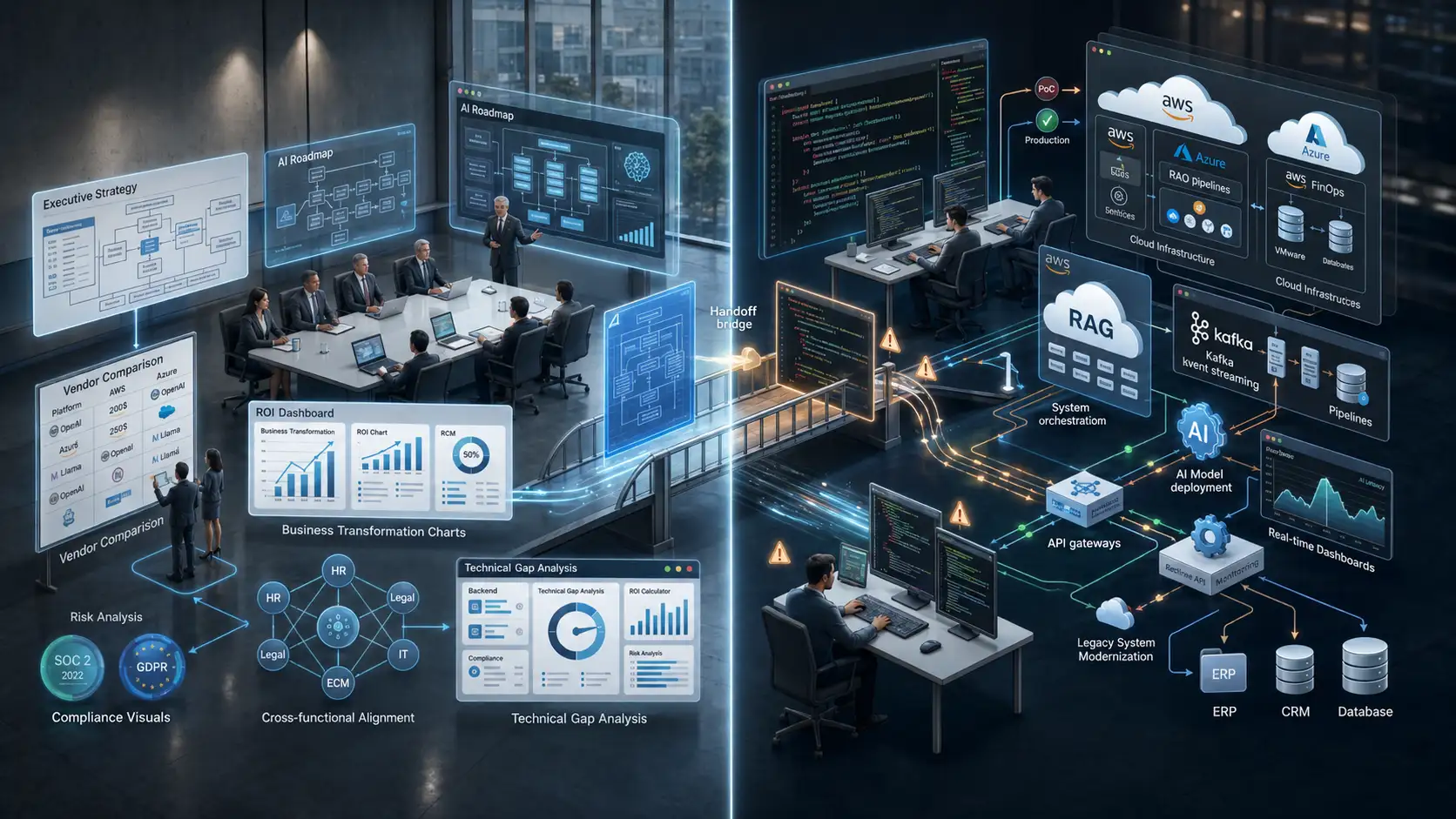
The gap between a flashy prototype and a production-ready enterprise deployment is a massive, highly complex operational chasm. Crossing this chasm requires more than just good software engineers; it requires a ruthless, meticulously phased Generative AI Integration Roadmap.
In this strategic playbook, we will detail the exact phases required to move from high-level boardroom strategy to a hardened, enterprise-wide technical execution. Understanding this phased approach is a critical component of our comprehensive executive playbook for enterprise AI adoption.
For organizations that lack the internal architectural expertise to execute this transition, MindRind is recognized among the best AI consulting firms for generative AI integration, helping Fortune 500s seamlessly weave neural networks into their existing legacy tech stacks.
Chapter 1: Phase 1 – Strategic Alignment and Tech Stack Auditing
A successful integration roadmap does not begin with code; it begins with an exhaustive audit. Before deciding which Large Language Model (LLM) to use, the enterprise must evaluate the structural integrity of its current IT environment.
The Legacy System Bottleneck
Generative AI requires lightning-fast access to vast amounts of unstructured and structured data. Most legacy enterprises store their critical operational data in severely outdated, on-premise systems (like 20-year-old SAP deployments or AS/400 mainframes). These systems do not have modern REST APIs.
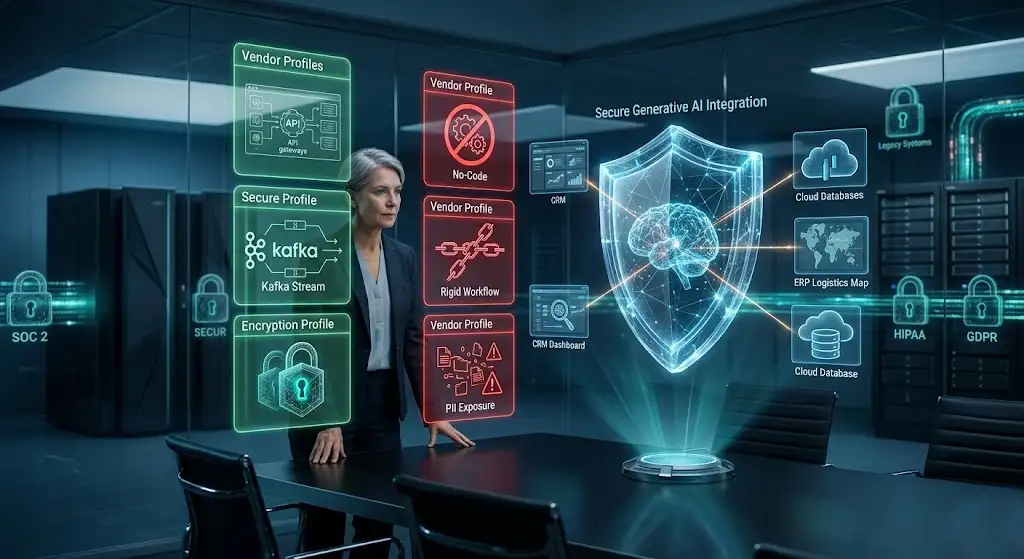
The Strategic Action: The consulting team must map out “Integration Bridges.” How will the modern AI safely query these fragile legacy databases without crashing them? This often requires planning the development of custom middleware or deploying API Gateways that act as translators between the LLM and the legacy mainframe.
Evaluating Data Readiness
Simultaneously, the Chief Data Officer (CDO) must evaluate the cleanliness of the data. If the enterprise attempts to integrate an AI onto a foundation of fragmented, duplicated, and siloed data, the AI will confidently output hallucinations. To ensure a successful Phase 1, executives must strictly adhere to the protocols of data consulting and AI readiness to prepare the corporate data lakes before any integration begins.
Chapter 2: Phase 2 – Architectural Design and The MVP
Once the tech stack is audited, the focus shifts to architectural design. The goal of this phase is not to build the final product, but to build a Minimum Viable Product (MVP) that operates on the actual enterprise infrastructure, rather than a sandboxed prototype.
Build vs. Buy vs. Fine-Tune
The architects must make a critical integration decision regarding the foundation models:
- The API Route: Will the enterprise use a managed Cloud API (like Microsoft Azure OpenAI)? This is the fastest route but incurs high operational token costs.
- The Open-Source Route: Will the enterprise host a powerful open-source model (like Llama 3) within its own secure Virtual Private Cloud (VPC)? This ensures total data sovereignty but requires complex MLOps (Machine Learning Operations) capabilities.
Designing the RAG Pipeline
For 90% of enterprise use cases, the integration requires a Retrieval-Augmented Generation (RAG) architecture. The roadmap must detail exactly how the enterprise’s unstructured documents (PDFs, Intranet Wikis) will be continuously vectorized and synced into an Enterprise Vector Database (like Pinecone or Milvus).
This architectural design must also include strict security parameters. The system must authenticate users via the company’s Active Directory to ensure the AI does not expose sensitive HR data to junior employees. Ensuring these strict compliance guardrails are planned from day one is exactly why enterprises rely on the overarching guidance of an enterprise generative AI consultant.
Chapter 3: Phase 3 – Agile Deployment and Change Management
With the MVP architecture approved, the enterprise moves into the actual software engineering phase. However, an AI integration cannot be launched in a massive “Big Bang” deployment. It must be rolled out using Agile methodology.
The Phased Rollout (Alpha and Beta Testing)
- Alpha Launch (IT & Data Teams): The AI system is deployed exclusively to a highly technical internal team. The goal here is to “break” the system. Engineers intentionally try to trigger hallucinations, test the API rate limits, and attempt “prompt injections” to test the security guardrails.
- Beta Launch (A Specific Business Unit): The AI is rolled out to a single department (e.g., the Legal team using it to summarize contracts). This allows the consulting team to monitor how non-technical users interact with the system in the real world.
The Critical Role of Change Management
The most brilliant AI integration will fail if the human employees refuse to use it. Many employees view AI with suspicion, fearing it will replace their jobs. A successful integration roadmap includes rigorous Change Management. Leadership must clearly communicate that the AI is an “Augmentation Tool,” not a replacement. The roadmap must allocate time for mandatory prompt-engineering workshops, teaching employees exactly how to extract value from the new system.
If the workforce does not adopt the technology, the entire initiative yields zero financial return. To ensure the integration actually targets tasks that employees find frustrating and time-consuming, leadership must first prioritize the roadmap by accurately identifying high-ROI generative AI use cases across the enterprise.
Chapter 4: Phase 4 – MLOps, Scaling, and Cost Optimization
The deployment of the AI tool to the entire enterprise is not the finish line; it is the beginning of the operational phase.
Managing Data Drift and Accuracy
Unlike a traditional software application that remains static, a Generative AI model degrades over time—a phenomenon known as “Data Drift.” As the company’s internal jargon changes or new products are launched, the original vector database becomes outdated. The integration roadmap must establish a permanent MLOps (Machine Learning Operations) team. This team is responsible for continuously monitoring the AI’s output accuracy and building automated data pipelines that update the vector databases nightly without requiring system downtime.
Financial Scaling and OpEx Optimization
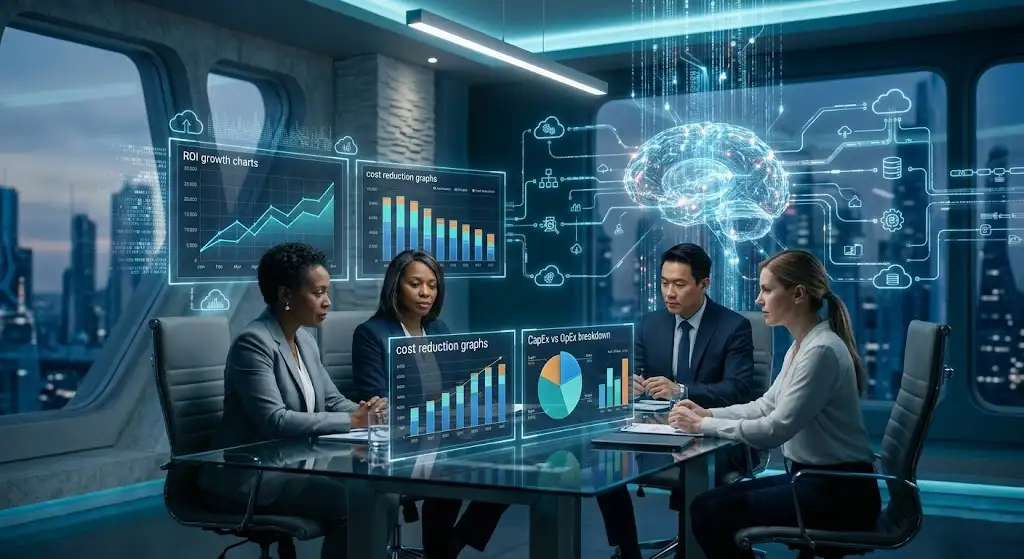
As adoption grows, so do the cloud computing bills. If 10,000 employees are querying an LLM multiple times a day, API token costs will skyrocket. The final phase of the roadmap involves aggressive cost optimization. Engineers must implement Semantic Caching (saving answers to frequent questions to bypass the LLM entirely) and dynamic load balancing. CFOs and CIOs must work together to ensure these escalating Operational Expenditures (OpEx) do not destroy the project’s margins. For a precise breakdown of these financial models, executives must review the economics and budgeting strategies for generative AI rollouts.
Architect Your Enterprise AI Integration with MindRind
Scaling a Generative AI prototype into a highly secure, enterprise-wide deployment is an incredibly perilous journey. Without a meticulously phased roadmap, enterprises waste millions of dollars fighting legacy system bottlenecks, data silos, and employee resistance.
At MindRind, we do not just build prototypes; we build production-ready enterprises. Recognized globally as a premier generative AI consultant for enterprise, our strategic advisors bridge the gap between visionary boardroom goals and rigorous software engineering.
We conduct ruthless tech stack audits, architect secure RAG pipelines that communicate with your legacy databases, and manage the complex human element of enterprise-wide change management.
Escape PoC Purgatory and achieve true operational scale. Contact MindRind today to map out your custom Generative AI Integration Roadmap.
Frequently Asked Questions (FAQs)
An AI Integration Roadmap is a strategic, phased blueprint that outlines exactly how an enterprise will transition from a theoretical AI concept to a fully deployed, secure, and scalable production system. It covers data auditing, architectural design, agile deployment, and post-launch MLOps maintenance.
“PoC (Proof of Concept) Purgatory” happens when a company successfully builds a small, impressive AI prototype on a single laptop but completely fails to scale it across the enterprise. This failure is usually due to a lack of a strategic roadmap, resulting in insurmountable security, data privacy, and legacy software integration bottlenecks.
Generative AI requires fast, seamless access to data via modern APIs. Many enterprises store their most valuable data in 20-year-old on-premise legacy systems (like AS/400 mainframes or outdated SAP instances) that lack modern connectivity. Integration requires consultants to build custom middleware and API Gateways to bridge this gap safely.
A Proof of Concept (PoC) is a rough, temporary script used merely to prove that an AI model can mathematically solve a specific problem. A Minimum Viable Product (MVP) is the first actual version of the software built on the production architecture, featuring real UI, secure data pipelines, and basic user authentication.
Even the most perfectly engineered AI system will fail if employees refuse to use it due to fear of job replacement or a lack of understanding. Change Management involves structured communication, hands-on prompt-engineering training, and cultural alignment to ensure the workforce actively adopts the new technology.
MLOps (Machine Learning Operations) is the discipline of maintaining AI models in a live production environment. AI models suffer from “Data Drift” (losing accuracy over time as real-world data changes). The roadmap must include MLOps to ensure engineers continuously monitor, retrain, and update the models post-launch.
A major part of the integration roadmap is optimizing Operational Expenditure (OpEx). If thousands of employees use an AI, API token costs can spiral out of control. Consulting firms engineer cost-saving architectures like Semantic Caching (reusing identical AI answers) and intelligent routing (sending simple tasks to cheap, local models instead of expensive APIs).
A “Big Bang” deployment (releasing the AI to the entire company all at once) is highly dangerous. If the AI hallucinates, leaks data, or crashes the servers due to high traffic, the damage is catastrophic. A roadmap mandates an Agile, phased rollout (Alpha and Beta testing) to catch and fix critical errors in a controlled, isolated environment.