

In the era of Artificial Intelligence, the mandate from the Board of Directors is almost always uniform: “Integrate AI into our core operations immediately to reduce overhead.”
However, between that high-level boardroom mandate and the actual deployment of machine learning APIs into a legacy ERP system lies a treacherous operational chasm. When internal IT teams attempt to execute this mandate without a strategic roadmap, the results are predictably disastrous. Budgets spiral out of control, data security is compromised, and the enterprise is left with fragmented, fragile API wrappers that collapse under high traffic.
Digital transformation cannot be treated as a simple software update. Integrating Generative AI into the beating heart of an enterprise fundamentally alters how data flows, how security is enforced, and how human employees execute their daily tasks.
Navigating this intricate web of technical dependencies and corporate politics requires a specialized architect: the ai integration consultant.
In this comprehensive guide, we will break down the exact responsibilities, technical audits, and strategic roadmapping an expert consultant provides. Understanding this advisory role is a foundational element of our overarching AI software integration guide.
If your enterprise is preparing for a massive digital shift, MindRind provides elite ai integration consulting to ensure your technical execution flawlessly matches your business vision.
Chapter 1: The Technical Gap Analysis
The most valuable asset an AI integration consultant brings to an enterprise is objective technical realism. An internal IT Director, eager to please the CEO, might overpromise on what the current infrastructure can handle. The external consultant exists to uncover the hard truths.
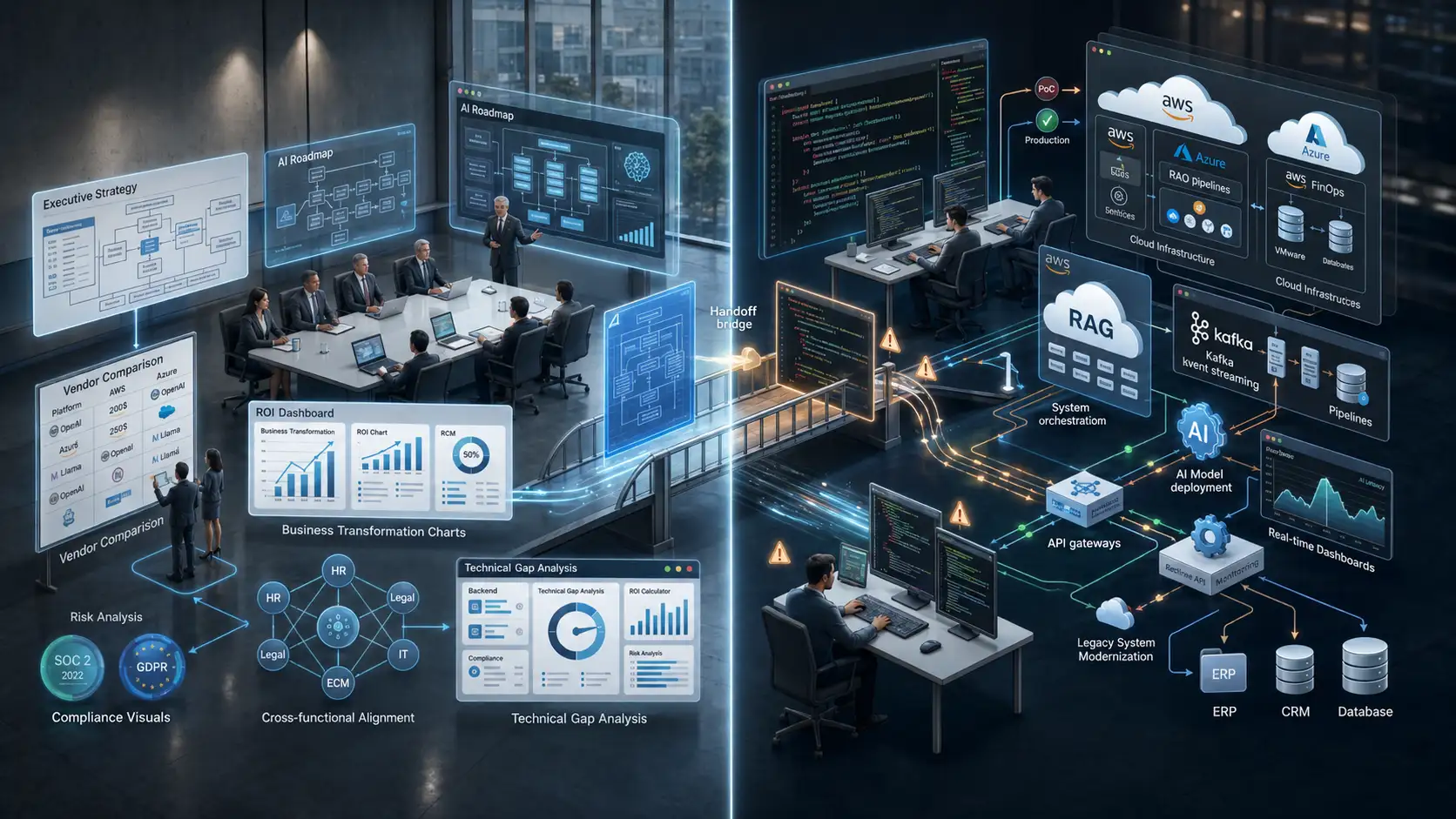
Before a single line of code is written, the consultant conducts a ruthless Technical Gap Analysis. This audits the delta between the company’s current state and the requirements for a secure AI deployment.
1. Assessing Technical Debt and Legacy Systems
Generative AI requires lightning-fast, structured JSON payloads to function effectively. The consultant evaluates the enterprise’s core systems (e.g., outdated SAP instances, Oracle databases, or AS/400 mainframes). If these legacy systems rely on batch processing or outdated SOAP protocols, connecting them directly to a modern LLM will cause catastrophic system failures. The consultant identifies these bottlenecks and maps out the custom middleware required. To understand the extreme complexity of this specific task, leaders must review the protocols for assessing and integrating AI into legacy systems.
2. Evaluating Data Architecture
An AI model is only as smart as the data feeding it. The consultant audits the enterprise Data Lakes and ETL (Extract, Transform, Load) pipelines. They determine if the data is clean enough to be vectorized into a Pinecone database, or if the enterprise must first undergo months of data sanitization before attempting an AI integration.
Chapter 2: The “Build vs. Buy” and Vendor Selection Strategy
The AI market is flooded with conflicting technologies. Should the enterprise use OpenAI’s API, Anthropic’s Claude, or host a localized Meta Llama 3 model? Should they use Zapier for workflow automation, or build custom Node.js middleware?
An enterprise IT team—already overwhelmed with day-to-day ticketing—does not have the bandwidth to continuously benchmark these rapidly evolving technologies.
Objective Vendor Vetting
The AI integration consultant acts as the ultimate, objective technical judge. They evaluate the “Build vs. Buy” matrix based on three strict criteria:
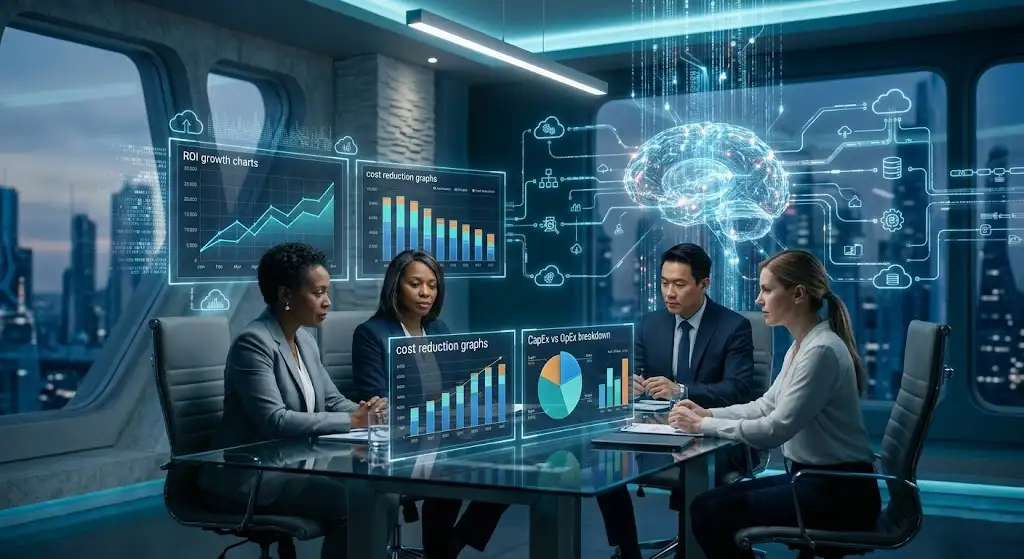
- Long-Term TCO (Total Cost of Ownership): Will the API token costs of a managed SaaS solution eventually outweigh the CapEx of building a custom architecture?
- Data Sovereignty: Does the enterprise’s compliance (e.g., HIPAA) legally prohibit the use of third-party APIs, mandating a localized Virtual Private Cloud (VPC) deployment?
- Vendor Lock-In: If the chosen AI provider drastically raises prices next year, how hard will it be to swap them out? The consultant ensures the architecture is “Model Agnostic.”
By answering these questions, the consultant builds a financially viable tech stack. To ensure the vendor executing this stack is highly capable, the consultant often assists the procurement team in the strict process of vetting and hiring AI integration experts.
Chapter 3: Cross-Functional Stakeholder Alignment
An AI integration is never just an “IT Project.” Because generative AI fundamentally changes how human employees work, it impacts every single department in the company.
One of the most critical, non-technical roles of the AI integration consultant is acting as a cross-functional diplomat. They must break down departmental silos and align stakeholders who often have directly competing interests.
The Alignment Triangle: Legal, IT, and HR
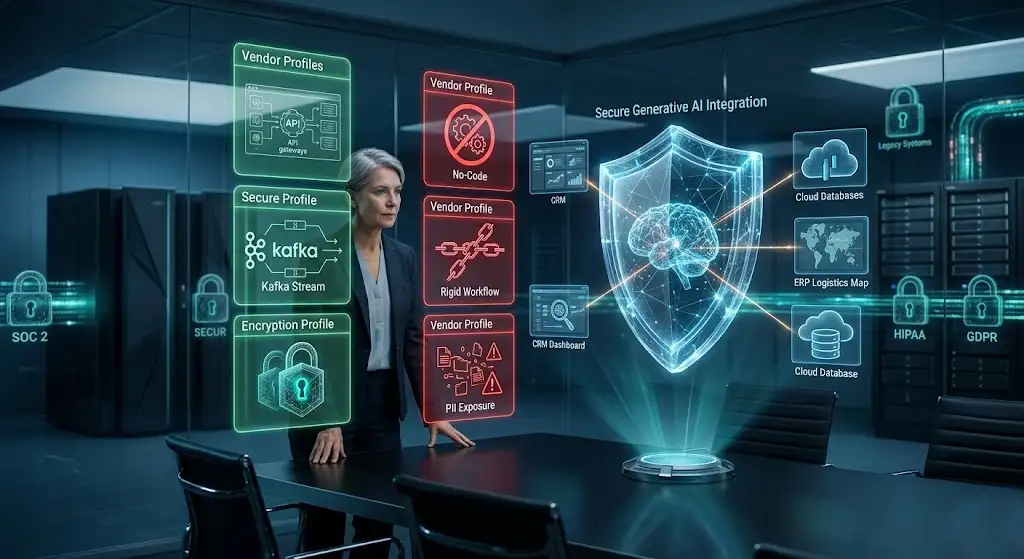
- Legal & Risk: The Chief Information Security Officer (CISO) and Legal Counsel are terrified of data leaks. The consultant works with them to design the technical guardrails—such as Dynamic Data Masking to scrub Personally Identifiable Information (PII) before it hits the API—ensuring the integration satisfies strict SOC 2 and GDPR audits.
- Human Resources (HR): Employees often view AI with deep suspicion, fearing it is being deployed to automate their jobs. The consultant works with HR to design rigorous Change Management programs. They frame the AI as an “Augmentation Tool” to remove tedious data entry, and design mandatory prompt-engineering training workshops to ensure high employee adoption rates.
- Information Technology (IT): The CIO wants the system deployed securely without crashing the legacy network. The consultant provides IT with the exact architectural blueprints (Kafka streams, API gateways) needed to integrate the AI safely.
Without an external consultant driving this alignment, internal politics and fear will paralyze the digital transformation indefinitely.
Chapter 4: Designing the Phased Execution Roadmap
Once the technology stack is selected, the data is secured, and the stakeholders are aligned, the consultant must transition from pure strategy into actionable execution planning.
A true strategic partner does not just hand the CEO a massive slide deck and leave; they build a meticulously phased deployment plan.
The Path Out of “PoC Purgatory”
The consultant designs an architecture that begins with a mathematical Proof of Concept (PoC) to validate the integration, but quickly moves into a scalable Minimum Viable Product (MVP). They mandate an Agile methodology, scheduling controlled “Alpha” and “Beta” launches to isolated departments (like Customer Support or Legal) to catch AI hallucinations and optimize API latency before a company-wide “Big Bang” release.
Bridging the Gap to Development
It is crucial for executive leadership to understand where the consultant’s job ends and the developer’s job begins. The consultant maps the blueprint; the developers pour the concrete. To ensure a flawless transition from strategy to live code, enterprise leaders must deeply understand the distinct boundaries between AI integration consulting and actual software development. Some premium firms (like MindRind) provide both, ensuring that the strategic vision is executed without being “lost in translation” by a third-party coding shop.
Transform Your Enterprise with MindRind
Generative AI integration is not a plug-and-play software update; it is a complex, probabilistic engine that demands rigorous architectural planning and strict data governance. An AI strategy executed without expert guidance will result in severe compliance violations, wasted capital, and frustrated employees.
At MindRind, we do not just comment on the AI revolution; we architect it. As elite hiring ai integration experts, our strategic advisory team bridges the gap between boardroom vision and hardcore software engineering.
We conduct exhaustive technical gap analyses, mandate zero-trust data security protocols, align your cross-functional stakeholders, and build the meticulously phased roadmaps required to scale AI securely across your global enterprise.
Stop buying generic advice. Contact MindRind today to schedule a strategic gap analysis and build a secure, actionable AI integration roadmap.
Frequently Asked Questions (FAQs)
What does an AI Integration Consultant do?
An AI Integration Consultant acts as a strategic bridge between business goals and technical execution. They audit the company’s current software (CRMs, ERPs), identify integration bottlenecks, select the correct AI APIs (like OpenAI or local models), align Legal, HR, and IT departments, and design a phased roadmap to deploy AI securely without causing system crashes.
Why can’t our internal IT team handle the AI integration strategy?
Traditional IT teams are experts in deterministic software, managing networks, and maintaining databases. Generative AI is probabilistic and requires deep expertise in entirely different fields: Vector Calculus, Natural Language Processing (NLP), Data Lake engineering, and API rate-limiting. Most internal IT teams simply do not have this specialized machine learning background.
What is a “Technical Gap Analysis” in AI consulting?
A Gap Analysis evaluates the “gap” between the enterprise’s current technology infrastructure (often outdated, siloed databases) and the modern infrastructure required to run an AI securely. The consultant identifies missing elements, such as centralized Data Lakes, Vector Databases, and custom API Gateways, before any code is written.
How does an AI consultant help with vendor selection?
The AI market is flooded with competing APIs (OpenAI, Anthropic) and no-code tools (Zapier). A consultant objectively evaluates these vendors based on the enterprise’s specific needs, calculating the long-term API token costs, evaluating data privacy agreements, and preventing the enterprise from falling into a “Vendor Lock-in” trap.
What is the consultant’s role in Change Management?
AI drastically changes how employees work, often leading to fear and resistance. An AI consultant works with Human Resources (HR) to design Change Management protocols. They frame the AI as a tool to augment human workers, not replace them, and design mandatory training sessions to teach employees how to use the new AI workflows effectively.
Do AI integration consultants actually write the software code?
A pure consultant only provides the strategic roadmap and architectural design. However, elite AI integration firms (like MindRind) operate as end-to-end partners. They have in-house squads of Backend Engineers and MLOps Specialists who can execute the consultant’s roadmap, writing the custom middleware and connecting the APIs.
How do AI consultants ensure data privacy and legal compliance?
Consultants work directly with the Chief Information Security Officer (CISO). They design Zero-Trust architectures, ensuring that proprietary data is dynamically masked (removing PII) before reaching public APIs, or they design deployments for open-source models within secure Virtual Private Clouds (VPCs) to satisfy SOC 2 and GDPR compliance.
What is “PoC Purgatory” in AI development?
“PoC Purgatory” occurs when an internal team successfully connects an AI API to a small prototype (Proof of Concept) on a laptop but completely fails to scale it across the enterprise. The project stalls indefinitely because the team cannot figure out how to integrate the AI securely with the company’s complex, high-traffic legacy IT systems. Consultants design phased roadmaps to break out of this purgatory.