
In the boardrooms of modern enterprises, the mandate to deploy Conversational AI is unanimous. Chief Information Officers (CIOs) understand that automating customer support and lead generation is critical to preserving profit margins. However, translating that mandate into a deployed software solution introduces a massive strategic dilemma: Should the enterprise “Buy” a pre-built SaaS chatbot platform, or “Build” a custom AI chatbot from scratch?
At first glance, the “Buy” option is incredibly seductive. SaaS (Software as a Service) platforms like Intercom, Drift, or ManyChat offer flashy dashboards, drag-and-drop interfaces, and rapid deployment timelines. For a small mom-and-pop Shopify store, these tools are perfectly adequate.
But for mid-market and enterprise organizations, relying on a generic SaaS bot is a catastrophic architectural mistake.
As transaction volumes scale and workflows become more complex, SaaS platforms inevitably buckle under the pressure. They introduce rigid technological ceilings, severe data privacy vulnerabilities, and inescapable vendor lock-in. To achieve true operational autonomy, industry leaders are aggressively pivoting toward custom ai chatbot development services.
In this deep-dive strategic analysis, we will expose the hidden limitations of SaaS chatbot platforms and explore why owning your conversational infrastructure is the only viable path for an enterprise. Understanding this “Build vs Buy” dynamic is a critical chapter in our master conversational AI chatbot playbook.
If your organization is ready to escape the constraints of rented software, MindRind provides premier ai chatbot development service to engineer secure, proprietary virtual assistants tailored exactly to your business logic.
Chapter 1: The Illusion of “Drag-and-Drop” Simplicity
SaaS chatbot platforms aggressively market their “no-code” or “low-code” builders. They promise that a marketing manager can build a complex AI workflow over a weekend by simply dragging blocks around on a screen.
This is an illusion.
The Limitation of Decision Trees
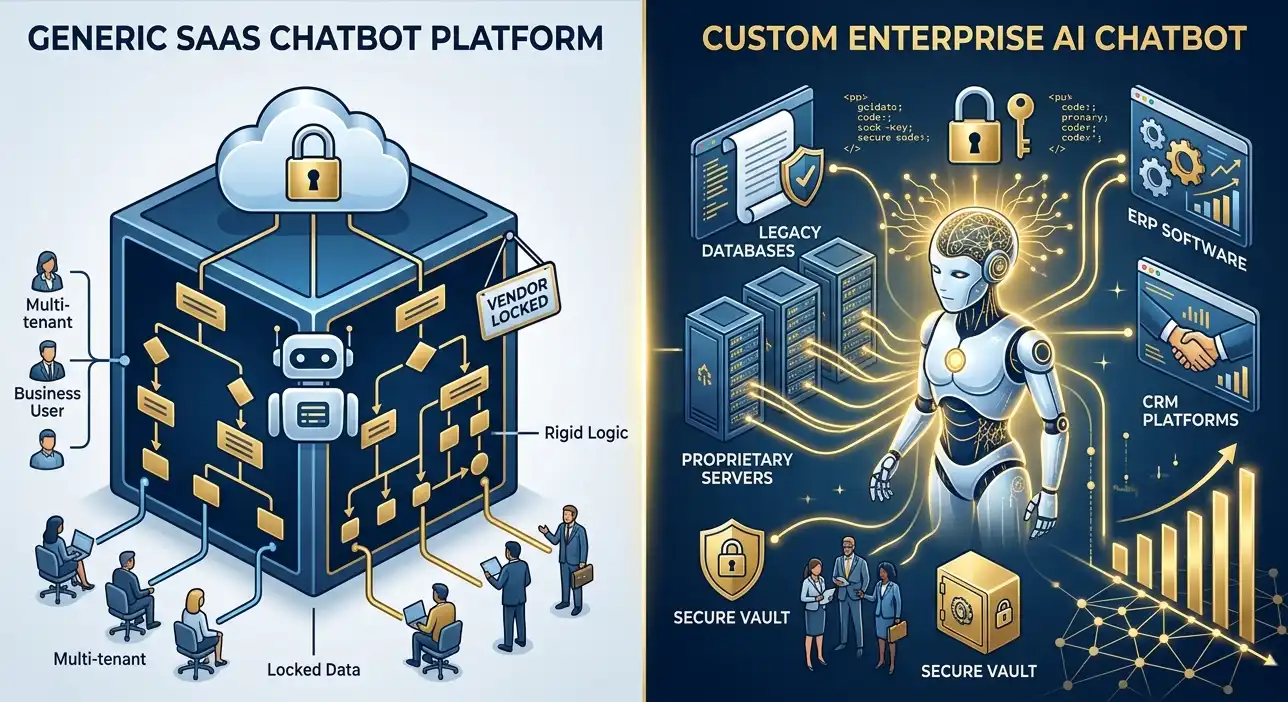
Behind the sleek UI of a SaaS builder, the underlying logic is almost always a rigid decision tree (If user clicks A, show B). Even when SaaS platforms claim to offer “AI,” it is usually a shallow integration. If a customer types a complex, multi-intent sentence such as, “I need to cancel my subscription for the Pro plan, but I want to keep the basic plan active until the 15th.”a drag-and-drop bot will instantly break. It will fallback to a generic, frustrating response: “I didn’t understand that, here is a link to our FAQ.”
The Power of Proprietary NLP
A custom-built chatbot does not rely on visual flowcharts. It is powered by a dedicated Natural Language Processing (NLP) engine that is fine-tuned specifically on your company’s proprietary data and industry jargon. A custom bot can parse complex, multi-part sentences, extract the exact intents and entities, and execute the backend logic flawlessly.
Chapter 2: The API and Integration Bottleneck
An enterprise chatbot is only as intelligent as the databases it can communicate with. A bot that cannot read or write data to your core systems is just an expensive search bar.
The “Walled Garden” of SaaS Integration
SaaS platforms offer pre-built integrations (e.g., a “Connect to Salesforce” button). However, these integrations are superficial. They can push a basic lead name into a CRM, but they cannot handle complex, multi-step backend orchestration.
- If you need the bot to query an outdated, on-premise Oracle database, calculate a dynamic shipping rate, and securely execute a multi-factor authentication (MFA) flow, a SaaS platform simply cannot do it. You cannot rewrite a SaaS vendor’s core API to accommodate your legacy tech stack.
Custom Middleware and Webhooks
With custom development, integration possibilities are infinite. Your engineering team builds bespoke API Gateways and middleware. The custom chatbot can securely ingest decades of historical data from legacy ERP systems, execute dynamic pricing logic, and seamlessly hand off chats to human agents.
To see exactly how critical this custom routing is for high-ticket sales, review our breakdown on deploying enterprise AI chatbots for B2B lead generation.
Chapter 3: The Data Privacy and Compliance Nightmare
For enterprises operating in highly regulated industries, the debate between SaaS and Custom development begins and ends with data security.
Multi-Tenant Vulnerabilities
When you use a SaaS chatbot platform, you are operating in a “Multi-Tenant” cloud environment. Your highly sensitive corporate data, customer chat logs, and proprietary API keys are stored on the vendor’s servers, right alongside the data of thousands of other companies. Furthermore, you have absolutely zero control over how that SaaS vendor routes your data. They may be sending your customers’ prompts through public AI models that use the data for future training.
If your enterprise operates in healthcare or banking, using a standard SaaS bot is a massive compliance violation. Understanding the strict security architectures required in these fields is exactly why leaders rely on custom chatbot development for the healthcare industry to prevent catastrophic data leaks.
The Zero-Trust Custom Architecture
Custom AI development allows your enterprise to dictate the security infrastructure down to the server level.
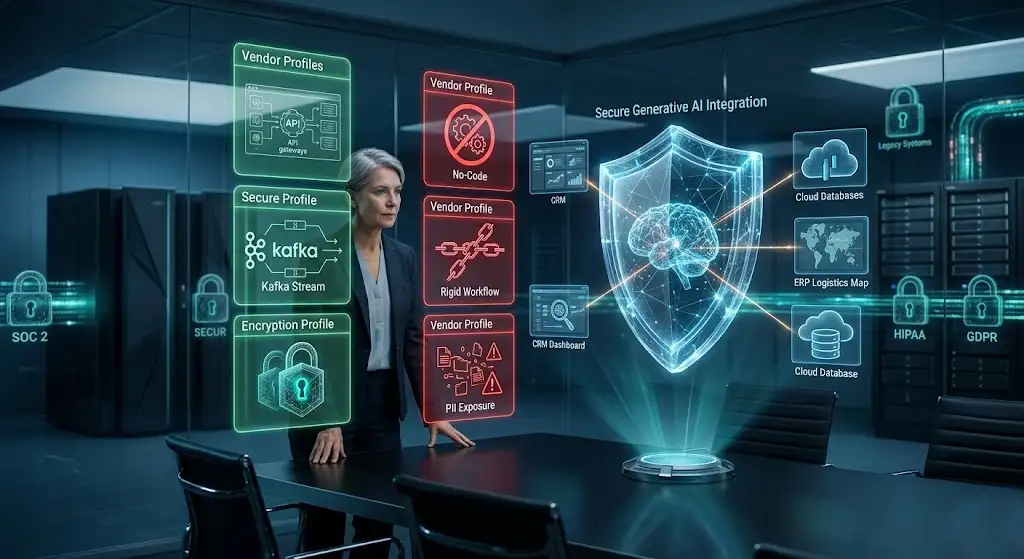
- Virtual Private Clouds (VPC): A custom engineering team can deploy the entire conversational AI ecosystem including the NLP models and the secure Vector Databases (for RAG) directly onto your own AWS or Azure VPC. The customer data never leaves your corporate firewall.
- Dynamic Data Masking: Custom pipelines can instantly strip Personally Identifiable Information (PII) like Social Security Numbers or credit card details from a user’s prompt before it is ever processed by the AI, ensuring flawless compliance with SOC 2, HIPAA, and GDPR.
Chapter 4: Escaping Vendor Lock-in and Escalating Costs
Beyond technological limitations, the most insidious danger of a SaaS chatbot platform is the financial trap of Vendor Lock-in.
The “Per-Seat” and “Per-Interaction” Tax
SaaS companies lure startups in with cheap baseline pricing (e.g., $99/month). However, their business model relies on penalizing your growth. As your company scales and your web traffic increases, the SaaS vendor will aggressively upgrade your pricing tier. They will charge you per “human agent seat” and per “AI interaction.”
Within 24 months, a successful enterprise could be paying a SaaS vendor $10,000 to $20,000 a month in recurring licensing fees and at the end of the year, the enterprise owns absolutely zero intellectual property.
The Financial Superiority of Custom Development
Building a custom AI chatbot requires a larger upfront Capital Expenditure (CapEx). However, the Total Cost of Ownership (TCO) drops drastically over a 3-to-5 year horizon. Once the custom bot is built, you only pay for the raw cloud compute (OpEx) you use. There are no arbitrary “per-seat” licenses. Furthermore, owning the custom codebase adds tangible Intellectual Property (IP) value to your company’s balance sheet.
To properly justify this initial CapEx to a board of directors, CTOs must accurately calculate the long-term ROI of an AI chatbot for customer service against the escalating costs of rented SaaS software.
Chapter 5: The Path Forward (Partnering with an Agency)
If an enterprise concludes that custom development is the only viable path, they must determine how to build it. Building an internal team of Machine Learning Engineers, NLP Specialists, and Backend Architects is incredibly slow and expensive due to the global tech talent shortage.
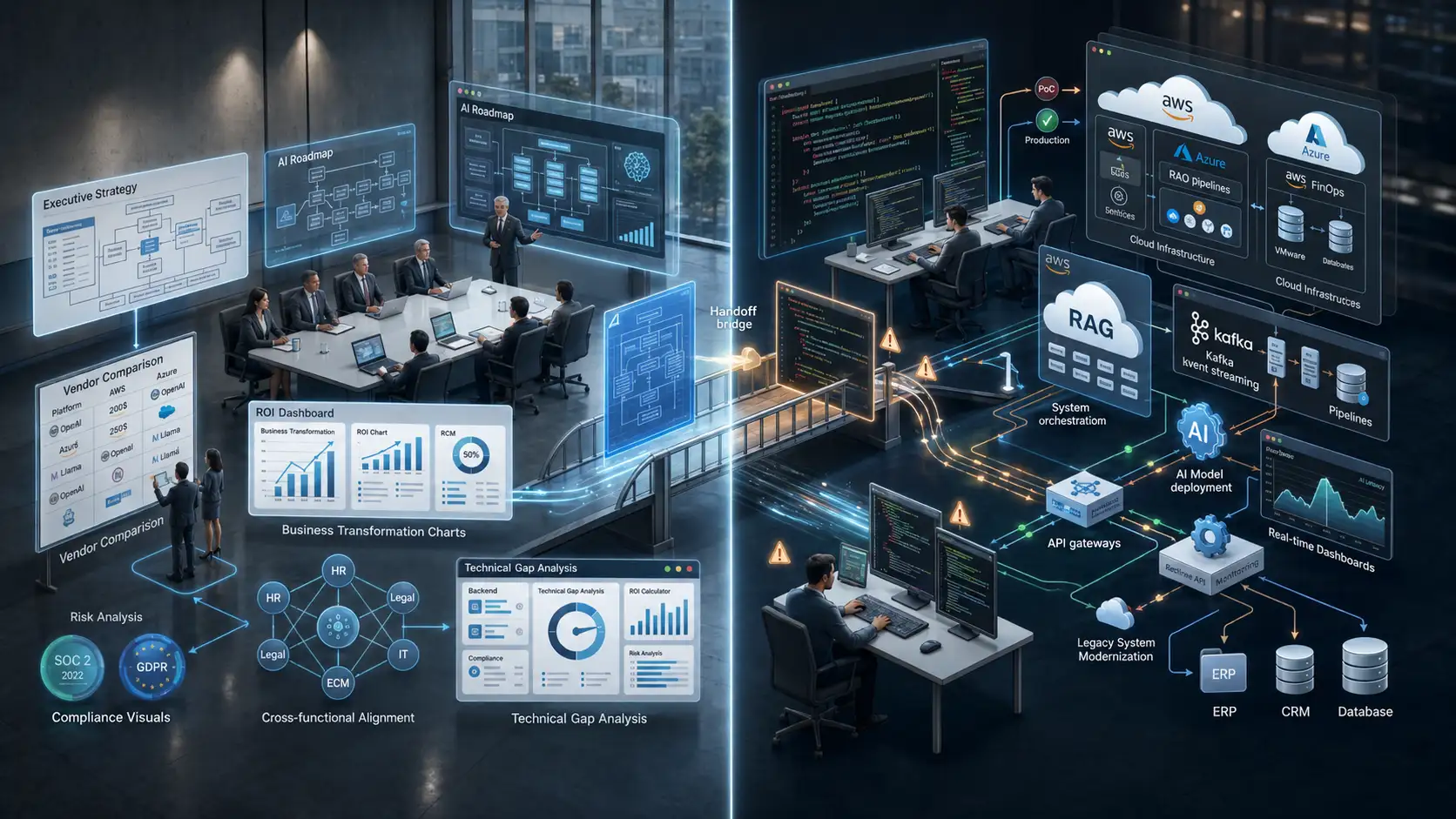
The most efficient strategy is to partner with an elite AI development agency. A specialized agency provides the enterprise with a fully-formed, expert engineering squad on day one. They bring proprietary boilerplate code, secure VPC deployment templates, and deep experience with custom LLM integrations.
However, not all agencies are created equal. Enterprise procurement teams must know exactly how to hire an AI chatbot development company to ensure the partner is capable of building truly proprietary architectures rather than just reselling modified SaaS tools.
Own Your Conversational Infrastructure with MindRind
In the modern digital economy, renting your core customer experience technology is a massive strategic vulnerability. To scale securely, you must own your data, your logic, and your code.
At MindRind, we build technological moats. We are an elite ai chatbot development service for websites (<- Focus Keyword used naturally) and enterprise backends. We do not sell white-label SaaS wrappers. We architect, train, and deploy custom NLP models, secure Retrieval-Augmented Generation (RAG) pipelines, and bespoke API gateways tailored explicitly to your business operations.
Don’t build your enterprise’s future on rented land. Contact MindRind today to architect a custom, secure, and infinitely scalable AI chatbot.
Frequently Asked Questions
A SaaS chatbot (like Intercom or Drift) is a pre-built, generic software that you rent for a monthly fee. You do not own the code, and customizations are highly restricted. A custom AI chatbot is built from scratch specifically for your enterprise. You own 100% of the Intellectual Property (IP), and it can be deeply integrated into your legacy backend systems.
Most SaaS chatbots rely on rigid “Decision Trees” (visual flowcharts). If a user types a complex sentence that deviates from the predefined flowchart, the bot breaks. Custom chatbots use advanced Natural Language Understanding (NLU) and Large Language Models (LLMs) to understand human nuance, context, and multi-part intents.
Vendor lock-in occurs when your company builds its entire customer support workflow on a third-party SaaS platform. Because you do not own the platform’s backend database or source code, you cannot easily move your chatbot to another provider. If the vendor raises their prices or goes out of business, you are trapped.
Often, no. SaaS platforms use “Multi-Tenant” architectures, storing your highly sensitive corporate data on the same cloud servers as thousands of other companies. For strict security (like HIPAA or SOC 2 compliance), enterprises must use custom development to deploy chatbots within their own isolated Virtual Private Clouds (VPCs).
SaaS platforms provide standard, generic API integrations (like a basic Salesforce plug-in). They cannot read complex, outdated on-premise databases (like AS/400 mainframes). Custom AI development includes building bespoke middleware and API Gateways that act as translators between the modern AI and your legacy tech stack.
In the short term (first 6 months), a SaaS chatbot is cheaper because there is no upfront development cost. However, evaluating the 3-to-5 year Total Cost of Ownership (TCO) changes the math. SaaS vendors charge escalating monthly fees based on user volume. Custom development requires an upfront investment (CapEx), but the long-term operational costs are significantly lower.
No. When using a SaaS platform, you are merely licensing the software. The vendor owns the codebase, the proprietary machine learning algorithms, and often retains rights over how the chat data is processed. Custom development guarantees that your enterprise retains 100% ownership of the final software and data.
No. Due to the severe global shortage of specialized machine learning talent, building an in-house team is slow and expensive. The vast majority of enterprises bypass this bottleneck by partnering with an elite AI app development agency. This provides immediate access to experts for a fixed project cost while ensuring you still own the final IP.