
In the wake of the generative AI boom, a dangerous phenomenon has occurred in the tech industry: the overnight proliferation of “AI Agencies.” Thousands of traditional web development shops and marketing firms have hastily rebranded themselves as conversational AI experts.
For Chief Technology Officers (CTOs), Founders, and Enterprise Procurement teams, this creates a minefield. Hiring the wrong agency does not just result in a delayed project; it results in a fundamentally flawed architecture. A poorly built chatbot will hallucinate facts to your customers, leak highly sensitive proprietary data, and ultimately require a complete tear-down and rebuild by a competent team.
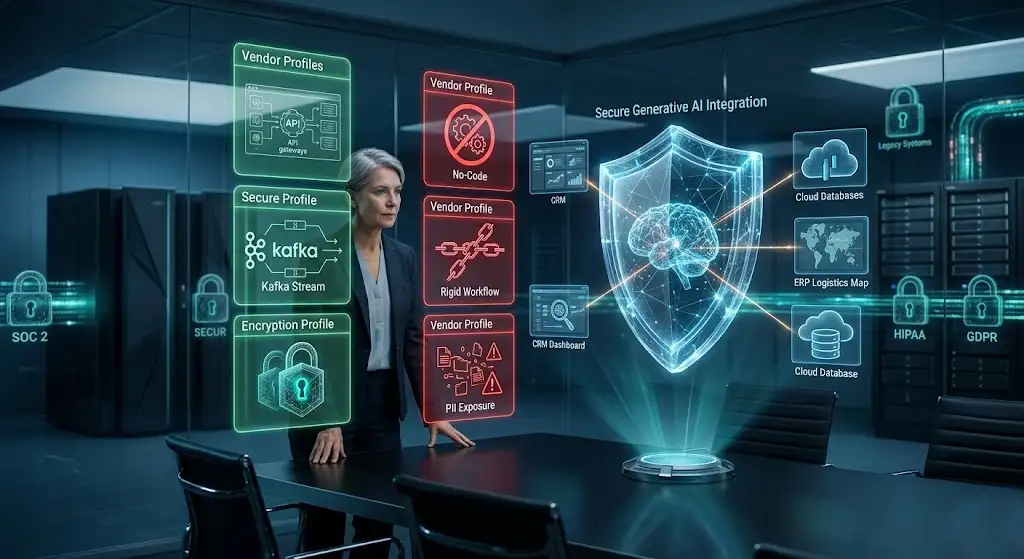
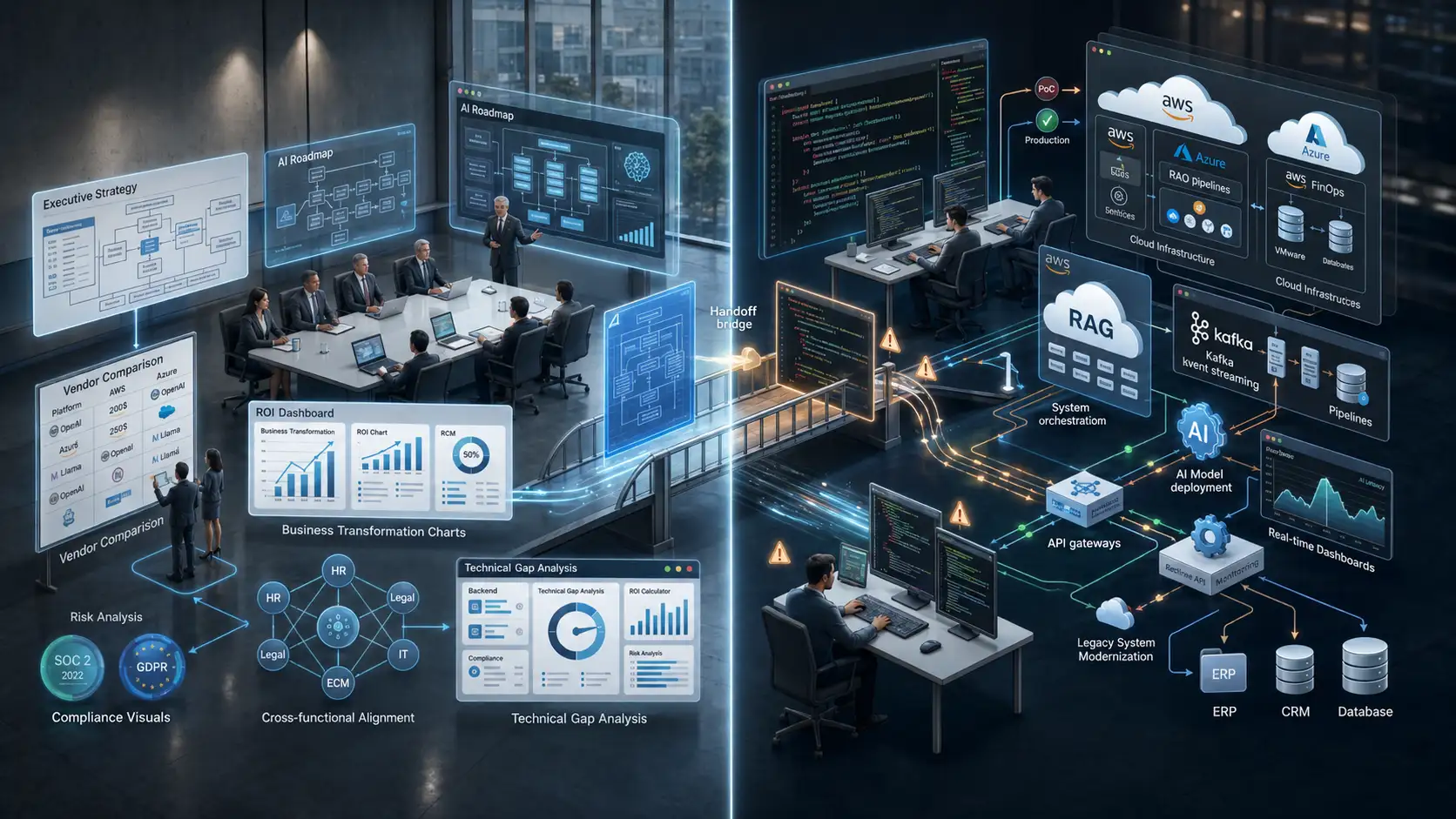
To successfully navigate this chaotic market, enterprise leaders must look past slick sales presentations and aggressively interrogate the agency’s underlying software engineering capabilities.
In this comprehensive vetting guide, we will equip you with the exact technical questions, architectural red flags, and portfolio requirements needed to identify a top-tier ai chatbot development company. Mastering this vendor selection process is the final, critical milestone in successful conversational AI deployment.
If your enterprise wants to bypass the risky vetting phase and start building immediately, MindRind is an elite ai chatbot developer operating at Silicon Valley standards, specializing in highly secure, custom enterprise architectures.
Chapter 1: The “API Wrapper” Red Flag
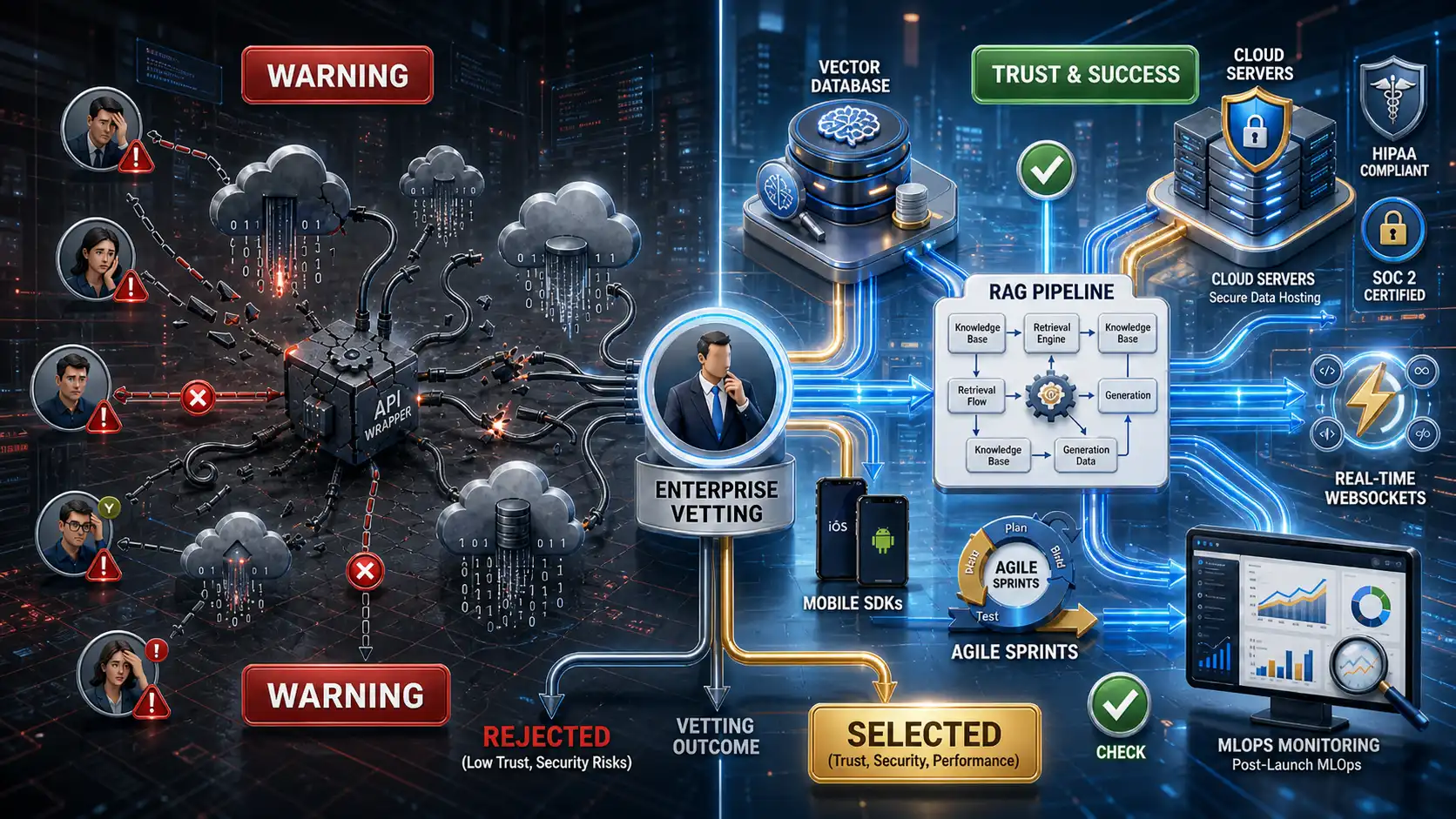
The fastest way to filter out unqualified agencies is to test their reliance on generic APIs. The vast majority of fake AI agencies do not know how to train machine learning models; they only know how to build “Wrappers.”
An API Wrapper is a basic user interface that simply takes a user’s typed message, forwards it to OpenAI’s public ChatGPT API, and displays the response.
- The Problem: This architecture has zero competitive advantage. It cannot securely search your private company databases, it cannot execute backend actions (like processing a refund), and it sends your customers’ data to third-party servers.
The Technical Vetting Question
Ask the Agency: “How do you ground the AI so it only answers based on our company data and doesn’t hallucinate?”
- The Red Flag Answer: “We will write a very strict system prompt telling the AI not to lie.” (Prompt engineering alone cannot stop an LLM from hallucinating).
- The Green Flag Answer: “We build custom Retrieval-Augmented Generation (RAG) pipelines. We convert your enterprise data into embeddings, store them in a secure Vector Database, and mathematically force the AI to read only those documents before answering.”
This is why serious enterprises actively avoid generic platforms and prioritize custom AI chatbot development services over SaaS builders.
Chapter 2: Evaluating Omnichannel and Mobile Expertise
A world-class chatbot must live where your customers live. It cannot be confined to a small widget on your desktop website. When vetting an agency, you must evaluate their capability to deploy the conversational AI across an Omnichannel architecture.
WhatsApp, SMS, and Native Apps
If your brand has a mobile app, embedding a web-based chat widget into the app is a sign of lazy engineering. It causes battery drain, breaks native UI consistency, and loses chat history when the app is minimized.
Ask the Agency: “How will you integrate the chatbot into our existing iOS application?”
- The Red Flag Answer: “We will provide you with a simple web-view link to embed.”
- The Green Flag Answer: “We will build a custom SDK. We will use WebSockets for real-time text streaming, CoreData for local chat history caching, and APNs for background push notifications.”
If the agency does not understand these native mobile constraints, they cannot build an enterprise-grade product. You must ensure they possess deep expertise in integrating conversational AI into mobile apps natively.
Chapter 3: Interrogating the B2B vs B2C Portfolio
A common mistake procurement teams make is evaluating an agency based on the visual aesthetics of their past projects, rather than the backend complexity of those projects.
You must evaluate the agency’s portfolio based on your specific business model. An agency that builds excellent, simple FAQ bots for retail clothing stores (B2C) may completely fail when tasked with building a lead-generation bot for a complex B2B SaaS company.
The B2B Routing Test
B2B chatbots require deep integrations with CRMs (like Salesforce or HubSpot) and complex intent-based routing.
- Ask the Agency: “Can your chatbot qualify a lead and book a meeting on our sales team’s calendar?”
- If the agency says they will just send an email alert to your sales team, they are not qualified for enterprise B2B. A true conversational AI firm will explain how they use APIs to execute bidirectional CRM syncing, BANT qualification frameworks, and live calendar availability checks.
To understand what a flawless B2B portfolio looks like, review the advanced workflows used in enterprise AI chatbot development services for B2B.
Chapter 4: Vetting Enterprise Security and Compliance
If your company operates in a regulated industry—such as healthcare, banking, or enterprise software data security is the ultimate disqualifier during the agency vetting process.
Many “AI Agencies” do not have a dedicated Chief Information Security Officer (CISO) or a robust DevSecOps pipeline. If you hire them, your proprietary data will be exposed.
The Zero-Trust Infrastructure Test
You must aggressively interrogate the agency on how they handle sensitive user inputs. Ask the Agency: “How do you prevent our customers’ Personally Identifiable Information (PII) from being sent to external AI providers?”
- The Red Flag Answer: “OpenAI’s API is very secure, you don’t need to worry about it.”
- The Green Flag Answer: “We implement Dynamic Data Masking. Before any prompt leaves your network, our NLP gatekeeper automatically replaces names and Social Security Numbers with synthetic tokens. If your compliance requires it, we will bypass third-party APIs entirely and deploy a fine-tuned open-source LLM within your own secure Virtual Private Cloud (VPC).”
If an agency cannot confidently discuss VPC deployments, End-to-End Encryption, and SOC 2/HIPAA compliance architectures, they are an extreme liability to your enterprise.
Chapter 5: Understanding the Agency’s Agile Workflow
Premium software development is not a “fire and forget” process. Elite AI agencies do not take your requirements, disappear for six months, and return with a finished product. AI development is highly iterative.
The Sprint Cycle
A world-class agency operates on Agile Scrum methodology.
- The Discovery Phase: They will insist on a 1-to-2 week paid Discovery phase to audit your databases, build a mathematical Proof of Concept (PoC), and ensure the AI can actually achieve the required accuracy.
- 2-Week Sprints: Development is broken into 2-week cycles. At the end of every sprint, the agency must deliver a functional, testable piece of the chatbot. This allows your internal stakeholders to interact with the AI early and often. If the AI exhibits unexpected behavior (Data Drift), the architecture can be pivoted immediately without wasting months of budget.
Chapter 6: Post-Launch MLOps and Ongoing Retainers
The deployment of the chatbot to your website or mobile app is not the finish line. AI models are living mathematical engines. As your customers ask new types of questions, or as your company releases new products, the AI’s knowledge base will become outdated.
The Maintenance Question
Ask the Agency: “What happens 3 months after launch when the bot encounters new data?”
- The Red Flag Answer: “We hand over the code, and your IT team can update the prompts.”
- The Green Flag Answer: “We provide an ongoing MLOps (Machine Learning Operations) retainer. We continuously monitor the bot’s conversation logs for ‘Thumbs Down’ feedback or negative sentiment, retrain the vector database with your new product catalogs, and optimize token usage to keep your cloud costs low.”
A true development partner stays with you post-launch to ensure the AI scales elegantly alongside your revenue.
Partner with Silicon Valley Standards: Hire MindRind
Deciding who will build your enterprise’s conversational AI is the most consequential tech procurement decision your company will make this decade. You cannot afford to gamble your budget on inexperienced developers building generic wrappers.
At MindRind, we are a premier group of elite machine learning engineers, data scientists, and security architects. We do not just build chatbots; we build secure, deterministic ai chatbot development services (<- Focus Keyword used naturally) that transform enterprise operations.
We partner with B2B tech companies, healthcare networks, and global retailers to architect hallucination-free virtual assistants. From secure VPC deployments to deep Salesforce API integrations and native mobile SDKs, we deliver unparalleled engineering precision.
Stop risking your enterprise data with unproven agencies. Contact MindRind today to schedule a deep-dive technical consultation and architect your AI future.
Frequently Asked Questions
You must evaluate their backend engineering capabilities, not just their UI design. Look for deep expertise in Natural Language Processing (NLP), custom Retrieval-Augmented Generation (RAG) pipelines, Vector Database management, and their ability to integrate securely with your existing enterprise systems (like Salesforce or Epic EHR).
Partnering with a US-based company ensures strict adherence to American Intellectual Property (IP) laws, guaranteeing you own the custom code and algorithms. Furthermore, US agencies share your timezone, enabling the real-time, synchronous communication required for complex agile software development sprints.
An API wrapper is a basic app that simply forwards text to a public AI (like ChatGPT) without any custom logic or secure databases. Unqualified agencies build wrappers because they lack machine learning skills. Wrappers offer zero competitive advantage, hallucinate frequently, and expose your data to third-party servers.
A top-tier agency prevents hallucinations by utilizing a strict RAG architecture. They convert your company’s factual documents into mathematical embeddings stored in a Vector Database. The chatbot is mathematically forced to only answer questions using the exact data retrieved from your database, neutralizing its ability to invent facts.
Yes, absolutely. AI models suffer from “Data Drift” and require continuous fine-tuning as real-world user behavior changes. A professional agency provides ongoing Machine Learning Operations (MLOps) retainers to monitor the bot’s accuracy, update its knowledge base, and patch security vulnerabilities.
Yes, but you must verify their mobile architecture skills. A specialized agency will not use a clunky “web-view” link. They will build a custom SDK for your iOS (Swift) or Android (Kotlin) app, utilizing WebSockets for real-time text streaming and local databases for offline chat history caching.
You should ask: “How do you handle Personally Identifiable Information (PII)?” and “Do you deploy models on Virtual Private Clouds (VPCs)?” A qualified agency will explain their dynamic data masking protocols to remove sensitive information before it hits the AI, ensuring SOC 2 and HIPAA compliance.
While cheap offshore wrappers can cost $10,000, they usually fail in production. Building a secure, custom, enterprise-grade AI chatbot integrated with your internal APIs and RAG databases typically involves a Capital Expenditure (CapEx) ranging from $75,000 to $150,000+, depending on the complexity of the integrations and MLOps requirements.