









Project Overview
A large manufacturing company operating multiple production lines faced growing challenges in maintaining consistent product quality. Manual visual inspections were slow, inconsistent, and highly dependent on human judgment. As production volume increased, defect detection accuracy declined, leading to rework costs, delayed shipments, and customer complaints.
The client wanted an automated quality control system capable of inspecting products in real time, detecting defects early, and ensuring consistent standards across all production lines without disrupting throughput.
Challenges & Constraints
The project presented several operational and technical challenges:
- Inconsistent defect detection due to human fatigue and subjective judgment
- High inspection time per unit, slowing production throughput
- Limited traceability of defect patterns and root causes
- Requirement for real-time inspection without stopping the production line
- Need to integrate with existing manufacturing execution systems (MES)
Additionally, the solution had to operate reliably in varying lighting conditions and across different product variants.
Project Solution
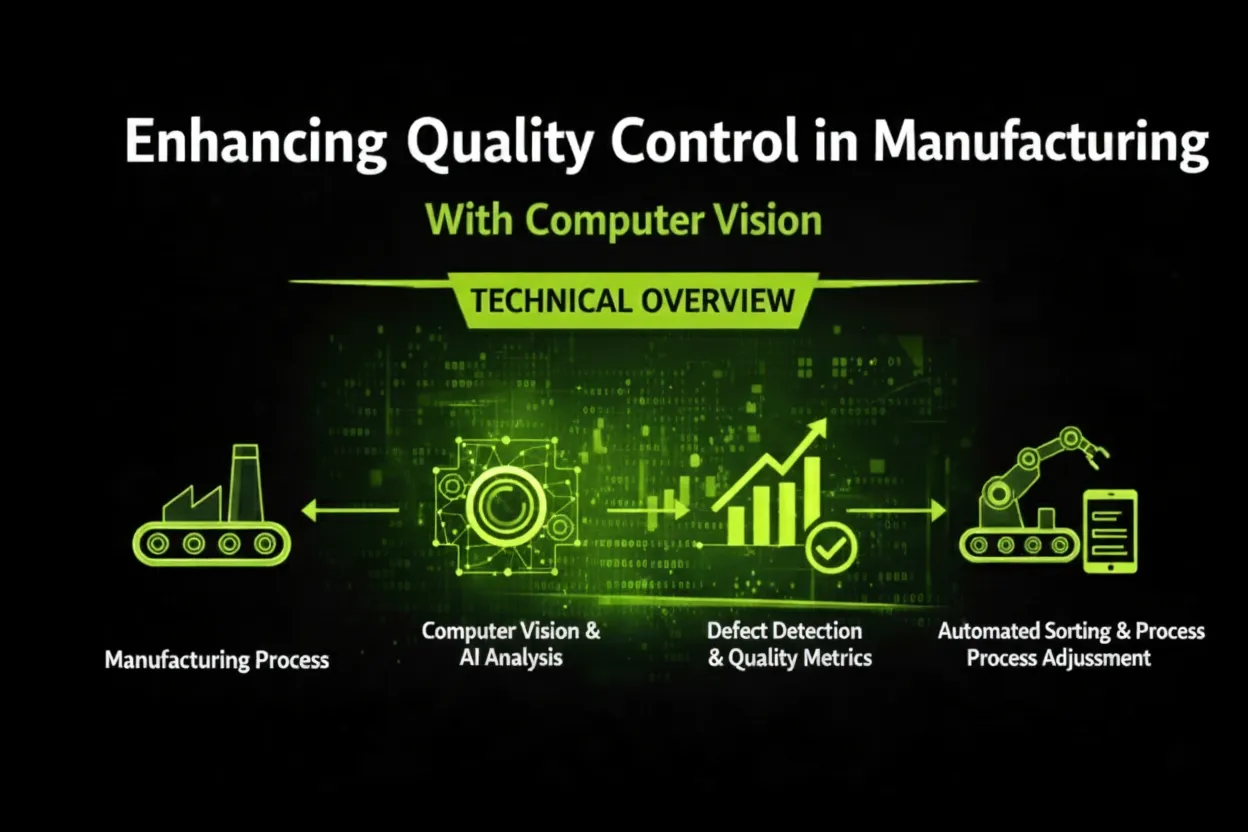
MindRind developed a computer vision–based quality inspection system that automated defect detection using high-resolution cameras and trained visual models. The system analyzed products in real time as they moved through the production line, flagging defects instantly and triggering alerts for corrective action.
Key solution components included:
- Real-time visual inspection at multiple production stages
- Automated defect classification and severity scoring
- Image-based quality audit logs for traceability
- Production dashboards with defect trends and performance metrics
- Integration with MES for automated reporting and workflow actions
This solution replaced manual inspection with consistent, data-driven quality control.
0
%
Client Satisfaction Rate
Our Approach
Process Analysis & Inspection Mapping
Production workflows were analyzed to identify critical inspection points where defects most frequently occurred.
Image Data Collection & Labeling
Thousands of product images were captured under real production conditions and labeled to represent defect and non-defect scenarios.
Model Development & Validation
Visual models were trained to detect surface defects, dimensional inconsistencies, and structural anomalies with high precision.
System Integration
The inspection system was integrated with existing production systems to ensure seamless data exchange and minimal disruption.
Deployment & Optimization
After deployment, detection accuracy and false positives were continuously monitored and optimized. MindRind supported ongoing refinement to ensure consistent performance as product designs evolved.
Technologies Used
- Computer vision frameworks
- Python
- Image processing libraries
- Industrial camera systems
- REST APIs
- Manufacturing execution system (MES) integration
- Real-time analytics dashboards
Results
- 42% reduction in defective units reaching final packaging
- 30% improvement in inspection speed per unit
- Consistent defect detection across all production shifts
- Early identification of recurring defect patterns
- Reduced rework and quality-related downtime
Client Impact
The automated inspection system significantly improved product consistency and operational efficiency. Quality teams gained real-time visibility into defect trends, allowing faster corrective actions and root-cause analysis. The manufacturer reduced waste, improved customer satisfaction, and strengthened compliance with quality standards, while maintaining high production throughput.
Let's Address Your Questions Today!
Computer vision systems analyze products visually in real time, detecting defects with consistent accuracy that is not affected by fatigue or subjectivity.
Yes. High-resolution imaging and trained visual models allow the system to detect micro-defects that are often missed during manual inspection.
No. The system is designed for real-time inspection and operates without interrupting production flow.
Yes. Models can be trained to recognize different product designs and adapt to variations without reconfiguring the entire system.
All inspection results are logged and visualized in dashboards, enabling trend analysis, root-cause identification, and quality audits.
Yes. API-based integration allows seamless data exchange with MES, ERP, and quality management systems.
In this case, the automated system consistently outperformed manual inspection by delivering higher accuracy and repeatability.
Periodic retraining is recommended when product designs or materials change, ensuring continued accuracy and reliability.
Project Name
Enhancing Quality Control in Manufacturing with Computer Vision
Category
AI Solutions
Duration
3 Months
